Masonic Mysteries Revealed (in 1919)

Here’s a fascinating old newspaper article I found online while I was doing some research into tarot history. It’s from the Galveston (Texas) Daily News of December 29, 1919, but it seems to be reprinted from the New York Herald.

Click the image or this link for a full-size PDF that you can enlarge — but if you know any Masons, don’t tell them that I let you in on their secrets.

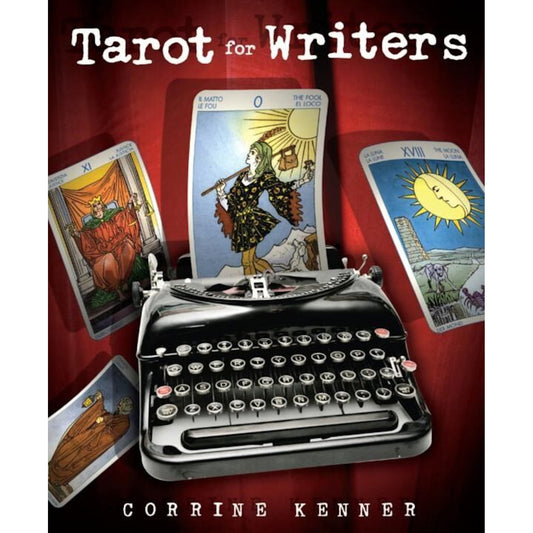
Tarot for Writers: Your Cast of Characters

Have you been thinking about crafting a short story? Here’s a free excerpt on character creation from my book Tarot for Writers.

The Real Deal

When you’re ready to start assembling the cast of your next story, deal yourself a starting hand. Begin with one card for every character you’ll need. Typically, you’ll want to include:

A Protagonist. The protagonist is the hero of the story. He sees the most action—and the most conflict. The word “protagonist” is Greek; it used to mean the first actor to speak on stage in a drama. Since the protagonist is the star of the show, you’ll want to develop a detailed character profile to use as a reference while you write.

An Antagonist. Every hero has an opponent—the anti-hero, or antagonist. Even though the antagonist isn’t the main attraction, he or she should be just as interesting as the protagonist.

Foils. Because everyone needs a friend, many literary characters have foils—sidekicks who illustrate their strengths and weaknesses. Don Quixote’s foil was Sancho Panza; Sherlock Holmes had Dr. Watson. Fred had Barney, and Lucy had Ethel. Even bad guys have henchmen, minions, and lackeys: Captain Hook had Mr. Smee, for example, and Dr. Evil had Mini-Me.

Supporting Characters. Figures who pop up throughout the course of a story without taking lead roles themselves are supporting characters. They usually have names and at least some explicatory background; you can develop character sketches for them, too.

Stock Characters. Almost every story includes stock characters, such as bartenders, taxi drivers, and mail carriers. They’re usually nameless, but they step in as needed to keep the story moving.

You might be tempted to develop a proverbial cast of thousands—especially when they come so readily through tarot cards. Don’t succumb. Remember to keep your minor characters locked into minor roles. Consolidate their parts when you can, and make sure that their presence adds to the story without detracting from the major players.

. . .

Photo by Katrina Brown; licensed by Corrine Kenner

Join the Tarot Classroom

If you’re like me, you’re always looking for new ways to deepen your connection to the spiritual side of life. You have a fairly good intuitive sense, but it’s often blocked — either by well-meaning friends and family members, or by your own “voice of reason.”

That’s why I created the Tarot Classroom — a new online retreat and study center here at TarotClassroom.com.

Registration is fast, easy, and free.

Join the Tarot Classroom, and you’ll discover new ways to work with tarot cards — including innovative techniques like dream analysis, past-life regression, and guided meditation. You can even learn how to integrate tarot with other spiritual tools, such as runes and astrology.

In the Tarot Classroom, you’ll have a golden opportunity to develop your intuitive strengths — and to quiet the nagging thoughts that make you doubt yourself. You’ll find the time and space you need to tune into your intuition and refine your spiritual practice. You’ll be able to test and challenge yourself in a safe place — so you can build your psychic skills and endurance, and gain confidence in your abilities.

A well-developed intuition would be reward enough, but I think you’ll discover something even bigger — and better — when you spend time in the Tarot Classroom. I think you’ll be able to use what you learn to turn your life around.

Most of us worry about our relationships. In the readings I do for others — and in my own life — I find that personal connections are everyone’s number-one concern.

No matter how successful we look on the outside, we all have insecurities. Naturally, we all fear rejection and ridicule from those we love and admire. More importantly, we all want to be loved and accepted for the people we really are. That’s true, no matter how old or young we are, or how much we weigh, or how much money we make. In fact, we all want more love, more friends, and more meaningful interaction with the world around us.

In the Tarot Classroom, you’ll discover that the tarot is more than just a tool for understanding the past or predicting the future. You’ll learn that your own inner wisdom is a powerful force for transformation. As you deepen your connection to the spiritual side of life, your relationships will change and grow, and your self-esteem will blossom. You’ll be able to shed old insecurities and self-doubts, and face each day with the skills you need for success.

The Tarot Classroom is an online environment, so you can access it from any laptop, iPad, or smartphone. And while you might be alone at your computer, you won’t be alone in the Tarot Classroom. I’ll be there to offer guidance and mentoring, and you’ll have the chance to connect with other tarot enthusiasts like yourself — especially on our Facebook page at Facebook.com/TarotClassroom.

The Tarot Classroom is brand new, so if you register today, you’ll be a charter member of the group!

Thank you for your interest, and I do hope you’ll join us.

Best regards,
Corrine Kenner
Author of Tarot and Astrology, the Wizards Tarot, Tarot for Writers, Tarot Journaling, and more

PS: Our first lesson will be posted on June 1, and our first webinar is slated for June 5. You won’t want to miss either one!

Prince Castracani Fibbia

Today’s image comes from Wikimedia: It’s a late 1860s painting of Prince Castracani Fibbia (1360-1419) with a deck of Tarot cards – tarocco bolognese – scanned from Andrea Vitali’s Il Tarocchino di Bologna. The Queen of Batons is visible, bearing the Fibbia arms. The artist is unknown.

Star Gazing: My Predictions for Dancing with the Stars

I posted this earlier on The Idol Psychics blog.

Star Gazing: My Predictions for Dancing with the Stars

Are you a fan of Dancing with the Stars? Yes, I am, too! Yesterday, the producers announced this season’s cast — so let’s see how they’ll do.

I drew a card from the Wizards Tarot for each contestant — twelve cards, straight off the top of a well-shuffled deck. Here’s what turned up. Continue reading

Ash Wednesday and the Five of Pentacles

Today is Ash Wednesday, which marks the start of Lent: forty days of penance, reflection, and fasting. A lot of Christians will be walking around with smudges of ash on their foreheads — but otherwise, they’ll look like their usual selves.

Centuries ago, they probably would have looked more like the figures in the Five of Pentacles.

Normally, the card is associated with hope and guidance, because most of us have been taught to turn to the church during times of trouble. Traditionally, it’s the one place we know we can find spiritual support. Most churches also offer emergency assistance to people in physical need, too.

There was a time, though, when some congregants deliberately turned their backs on the church — because they didn’t believe they deserved the blessings and forgiveness they could find in the House of God. On Ash Wednesday, they dressed in sackcloth and ashes, and they were ritually cast out of the sanctuary to contemplate their faith.

Think about that: there was a ritual in which some believers could voluntarily be thrown out of church.

Today, a lot of people have turned their back on organized religion, because it doesn’t seem to meet their spiritual needs. Most leave with at least some feelings of bitterness and recrimination.

In a tarot reading, the Five of Pentacles can be a gentle reminder to reclaim their faith, even if they need to find a new structure for its expression.

Personally, I think the concept of Lent is remarkable. For most people, a forty-day period of intentional separation and contemplation would certainly be easier than forty years of estrangement.

I also like the concept of Lent as a time to reconcile our thoughts and deeds with our spiritual beliefs. We could all use that “time out” once a year.

. . .

Here’s a good description of Ash Wednesday from Catholic.org:

Ash Wednesday marks the beginning of the Season of Lent. It is a season of penance, reflection, and fasting which prepares us for Christ’s Resurrection on Easter Sunday, through which we attain redemption.

Why we receive the ashes

Following the example of the Ninevites, who did penance in sackcloth and ashes, our foreheads are marked with ashes to humble our hearts and reminds us that life passes away on Earth. We remember this when we are told

“Remember, Man is dust, and unto dust you shall return.”

Ashes are a symbol of penance made sacramental by the blessing of the Church, and they help us develop a spirit of humility and sacrifice.

The distribution of ashes comes from a ceremony of ages past. Christians who had committed grave faults performed public penance. On Ash Wednesday, the Bishop blessed the hair shirts which they were to wear during the forty days of penance, and sprinkled over them ashes made from the palms from the previous year. Then, while the faithful recited the Seven Penitential Psalms, the penitents were turned out of the church because of their sins — just as Adam, the first man, was turned out of Paradise because of his disobedience. The penitents did not enter the church again until Maundy Thursday after having won reconciliation by the toil of forty days’ penance and sacramental absolution. Later, all Christians, whether public or secret penitents, came to receive ashes out of devotion. In earlier times, the distribution of ashes was followed by a penitential procession.

The Ashes

The ashes are made from the blessed palms used in the Palm Sunday celebration of the previous year. The ashes are christened with Holy Water and are scented by exposure to incense. While the ashes symbolize penance and contrition, they are also a reminder that God is gracious and merciful to those who call on Him with repentant hearts. His Divine mercy is of utmost importance during the season of Lent, and the Church calls on us to seek that mercy during the entire Lenten season with reflection, prayer and penance.

Image Note

The Five of Pentacles card that illustrates this post is from an original “Pam B” Rider-Waite tarot deck that was probably printed in the 1920s.

Fun with predictions: Who will win this Year’s American Idol?

I’m easing into the challenge of predicting this year’s American Idol winner by pulling a single rune.

Runes are small pieces of wood, clay, or stone, marked with the letters of an ancient Scandinavian alphabet. Each letter has both a literal and a symbolic meaning.

I pulled the”Berkana” rune — a symbol of fertility, creativity, and flowing water. The word “Berkana” takes its name from the birch tree, which can bend without breaking.

Berkana almost always describes women — so I’ll go out on a birch limb, and predict that this year’s American Idol will be a young woman.

Because “Berkana” symbolizes fertility, I would also guess that this year’s winner will be a mother. She’s probably given birth to at least one child — but possibly more than one, because she’s just so fertile.

As I write this, I wonder: could this year be the year that a pregnant contestant competes for the win?

Alternately, the rune could suggest creative fertility. This year’s winner will probably a singer/songwriter who gets high marks for composing her own music.

I tend to pick up on a lot of puns — both verbal and visual — when I do readings. When I pulled the rune, I was struck by the fact that the “B” symbol on my runestone looked like a pair of breasts. That reinforced my first impression that the winner will be a girl — because she’ll have a nice rack.

I wondered where the winner would come from, and as I did, I absent-mindedly turned the runestone on its side. From that angle, the “B” looked like a mountain range. To me, it looks as though the winner will come from a hilly or mountainous area. The winner might also have auditioned in Colorado.

Historically, the Berkana rune symbolized an array of goddesses, including the Norse goddesses Freya, Frigg, Hel, Nerthus, Holda and Berchta. You don’t find many American girls with those names, but I’m willing to bet that this year’s winner will be named after a goddess or a female saint. Keep your eyes open for a Mary, Maria, Bridget, Catherine, or some other name with a strong religious or spiritual overtone.

Oddly enough, I also see this year’s winner hurting her leg or twisting her ankle at some point during the competition — not enough to be serious, but just enough to cause a bit of a stir. (Maybe that’s another direct reference to the birch: she’ll have limbs that can bend without breaking!)

And one last thing to note: this year’s winner will also have experienced a tragic fire or a burn in her past.

But here’s something to remember: I did this prediction just for fun, and just as a mental exercise, without knowing anything about this year’s lineup. I reserve the right to change my mind if I fall in love with any of the contestants along the way.

. . . . . . . . . . . . . . . . . . . . . . . . .

Note: This was originally posted on the Idol Psychics website at http://idolpsychics.com/2012/01/27/my-prediction-this-years-winner/.